
Brick Pointing Cost Manhattan Owners Can Plan Around
What you pay for pointing in Manhattan depends less on the mortar and more on how the crew reaches the wall. A ground-floor patch and a twelfth-floor elevation can use the same materials and land at very different prices. This guide explains every line that shapes a pointing estimate so you can compare bids with confidence.
How Much Does Brick Pointing Cost in Manhattan
Brick pointing in Manhattan usually costs between $12 and $30 per square foot of wall, with a minimum charge of around $800 for small jobs. Low-rise walls reached from a ladder or pipe scaffold sit at the lower end, while high-rise and landmark facades can reach $40 per square foot. Prices run higher than national averages because of access equipment, sidewalk protection, permits and city labor rates.
Typical Manhattan Pointing Price Ranges by Job Type
Use these ranges to plan a budget. Every building gets its own written estimate after a site visit.
| Job Type | Typical Manhattan Range | Notes |
|---|---|---|
| Small spot repair visit | $800 to $2,000 per visit | Minimum charge covers setup, travel and cleanup |
| Repointing, low-rise wall from ladder or pipe scaffold | $12 to $20 per sq ft | Rowhouse fronts, rear walls, courtyards |
| Repointing, mid-rise building with scaffold | $18 to $28 per sq ft | Five to twelve story walk-ups and elevator buildings |
| Repointing, high-rise or landmark facade | $25 to $40 per sq ft | Suspended scaffold, roof rigging or historic mortar matching |
| Tuckpointing with ribbon joint finish | $20 to $35 per sq ft | Two-color work takes more skilled labor |
| Flash pointing over sound joints | $6 to $12 per sq ft | Surface sealing only, no deep cut-out |
| Full brownstone or rowhouse front | $8,000 to $30,000 per front | Depends on height, joint depth and stoop or trim work |
| Chimney repointing | $800 to $3,500 per chimney | Height, access and crown condition vary |
| Sidewalk shed and permits | Priced separately | Based on frontage length and how long it stays up |
Ranges reflect typical Manhattan pricing for planning only and are not an offer. Your written estimate is based on measured quantities and access for your building.
For what each method involves, see tuckpointing Manhattan, flash pointing Manhattan and chimney repair Manhattan.
Seven Things That Change Your Pointing Price
Each factor is rated by how much it usually moves the total on a Manhattan job.
Access and Height
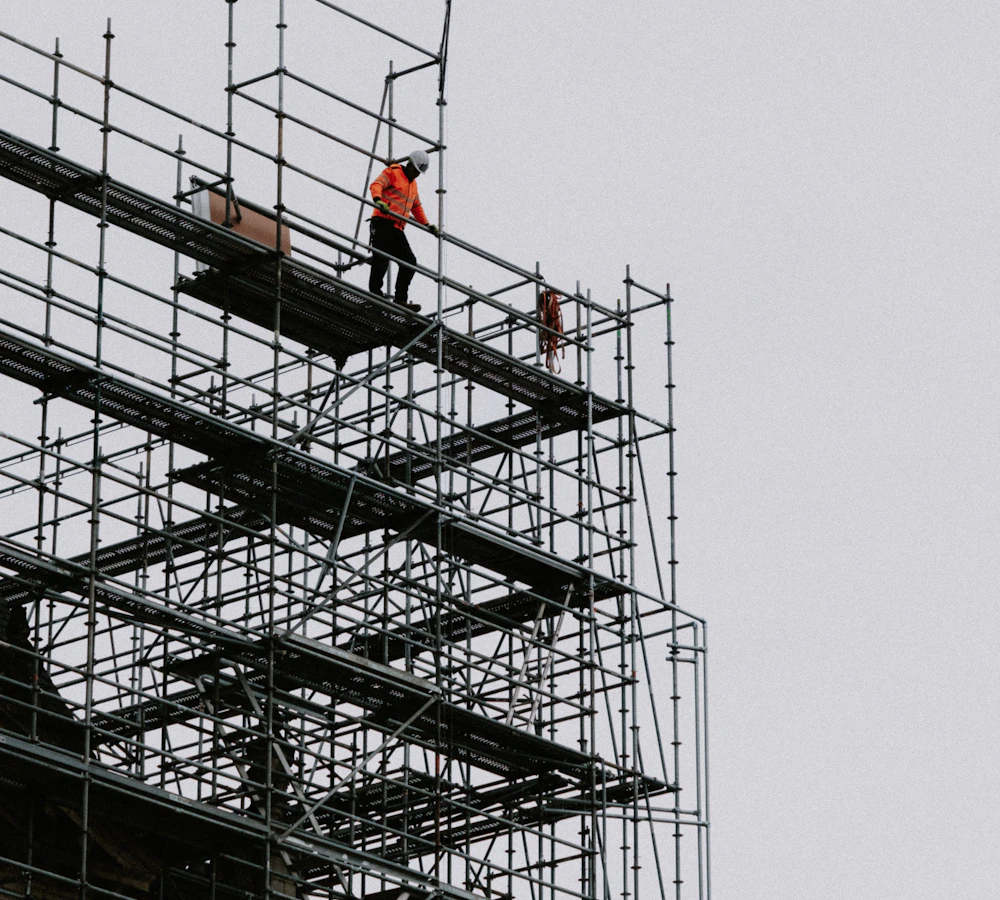
Ladders, pipe scaffold and suspended scaffold each carry very different setup and daily costs. On tall buildings, access can be the largest single line on the estimate.
Sidewalk Protection
Work over a public sidewalk often needs a shed or overhead protection, which is billed by length and by month.
Joint Depth and Condition
Shallow surface wear costs less to fix than joints that must be cut back deep to reach sound mortar.
Mortar Type and Color Match
Soft lime mortars for older brick and custom color matching take more time than a standard mix.
Area and Percentage of Wall
Spot repairs across a large wall can cost nearly as much per square foot as doing the whole wall, because setup is the same.
Brick Repairs Found During Work
Spalled or loose brick uncovered once joints are opened is priced as unit replacement. See brick repair Manhattan.
Permits and Building Rules
Permits, co-op board requirements, insurance certificates and work-hour limits all add time and paperwork.
What Pointing Projects Usually Look Like in Manhattan
Three common building types and what shapes the price on each.
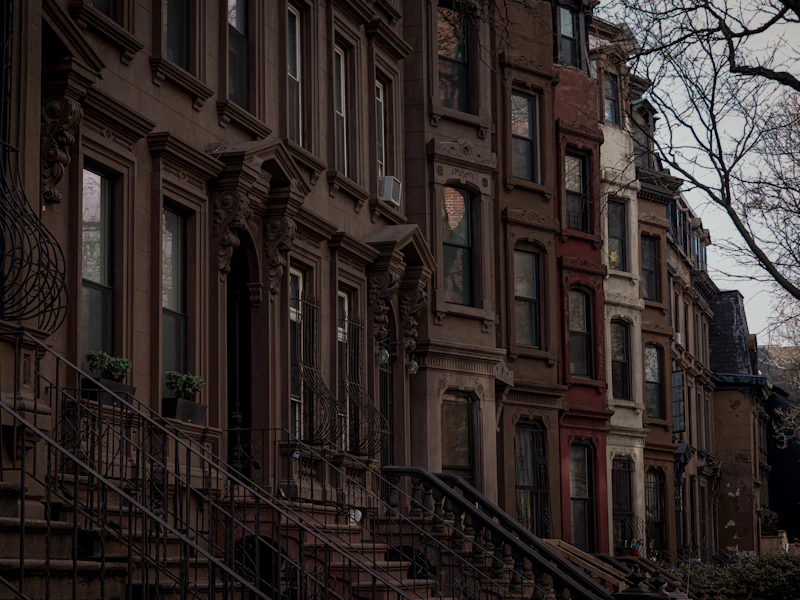
Brownstone Front in Harlem
Four stories, worked from pipe scaffold. Main costs are scaffold rental, deep joint cut-out and a lime mortar matched to the original.
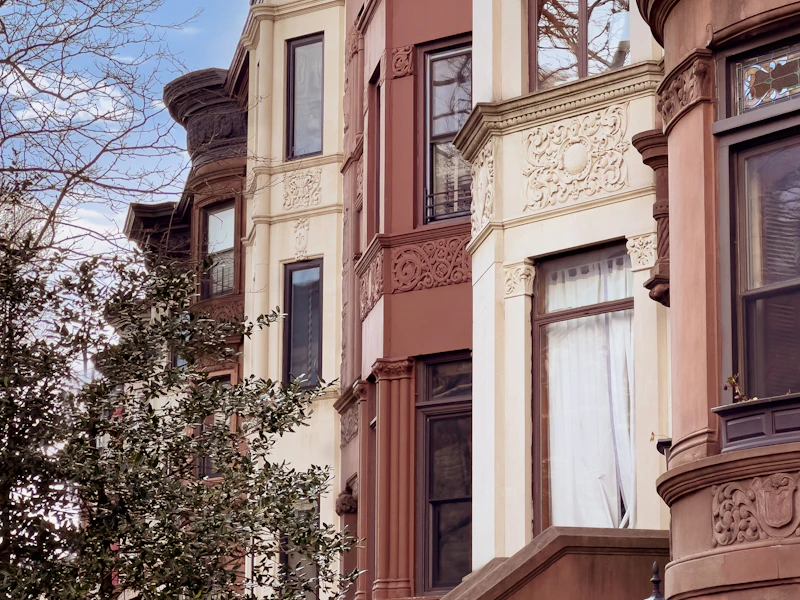
Walk-up Rear Wall on the Upper West Side
Five stories facing a backyard with no sidewalk above. No shed needed, so the price leans on labor and scaffold time.
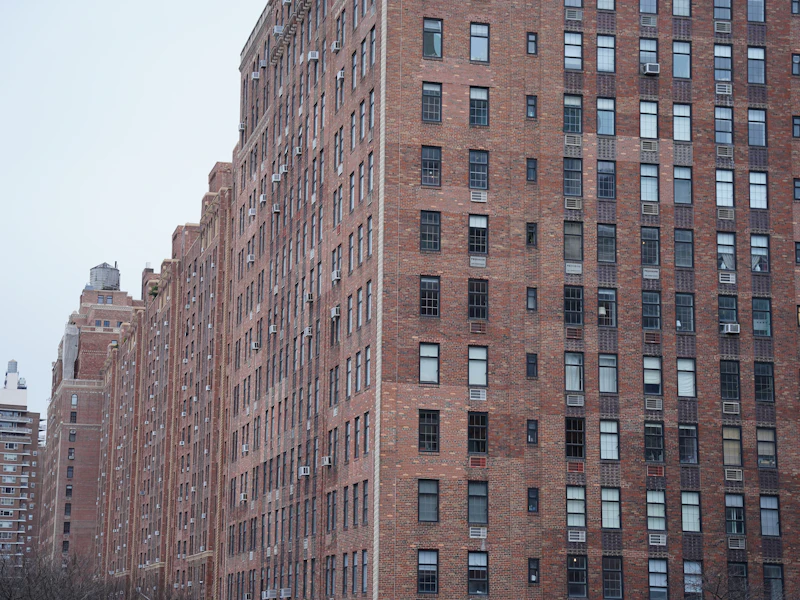
Co-op Elevation in Murray Hill
Twelve stories over a busy sidewalk. Suspended scaffold, roof rigging, a sidewalk shed and board approvals shape most of the budget.
What Your Brick Pointing Estimate Should Spell Out
A fair estimate lets you compare contractors line by line. Look for these items.
- Square footage or a marked-up photo of each wall area
- Depth of joint removal and the tools used
- Mortar type and how the color will be matched
- Access method and who supplies scaffold or rigging
- Sidewalk shed and permits, included or separate
- Allowance or unit price for brick replacement
- Cleanup, debris removal and roof protection
- Proof that the contractor is licensed and insured

Practical Ways to Lower Repointing Cost NYC Owners Use
Small planning choices can take real money off a pointing job.
Bundle Work on One Setup
Pair pointing with sill, lintel or parapet work while scaffold is already up.
Fix Leaks Early
Open joints left through a few winters turn into brick replacement, which costs more.
Plan Around Compliance Cycles
Scheduling pointing before a Local Law 11 inspection can keep items off the unsafe list.
Share Access With Neighbors
On attached rowhouse blocks, two owners can sometimes share one scaffold setup.
Book in Shoulder Seasons
Spring and fall schedules fill fast, so early booking gives more flexibility on dates.
Brick Pointing Cost Manhattan Questions
Straight answers about quotes, boards and payment.
Why do Manhattan pointing quotes vary so much between contractors?
Most of the difference comes from access, protection and how deep each contractor plans to cut the joints. Compare the scope line by line, not just the total.
Is it cheaper to point only the worst areas?
It can be, but setup costs stay the same. If more than a third of the wall needs work, a full repointing often gives better value per square foot.
Do co-op and condo boards add to the cost?
They can. Insurance certificates, alteration agreements, work-hour limits and board engineer reviews all take time that is built into the price.
Is the pointing estimate free?
Yes. We visit the building, measure the walls and send a written estimate at no cost.
Does the cost include cleaning the brick after pointing?
Normal cleanup of mortar smears is included. A full facade wash or paint removal is a separate scope priced on its own.
Can pointing be paid in phases?
On larger buildings, work is often split by elevation with a payment schedule tied to each completed phase.
Get a Written Brick Pointing Price for Your Building
One visit, real measurements and a line-by-line estimate you can compare against any other bid.
Related Masonry Services
Learn about the pointing services behind these prices.