
Brownstone Repair in Manhattan
Brownstone gives Manhattan’s row houses their warm color and carved detail, but it is a soft stone that peels and crumbles with age. Our licensed and insured crews handle brownstone repair in Manhattan by patching, resurfacing and rebuilding lost profiles with materials matched to your stone, so the front looks right and stays sound.
What Brownstone Is and Why Brownstone Repair Is Needed
Brownstone is a reddish brown sandstone that was used to face thousands of New York row houses in the 19th century. Much of it was set on edge, with its natural layers standing upright on the face of the building. Water gets between those layers, freezes and pushes them apart, so the stone peels, flakes and loses its carved edges over time.
That is why brownstone repair is a specialty of its own. It needs different materials and methods than brick, and the goal is always to save as much of the original stone as possible.
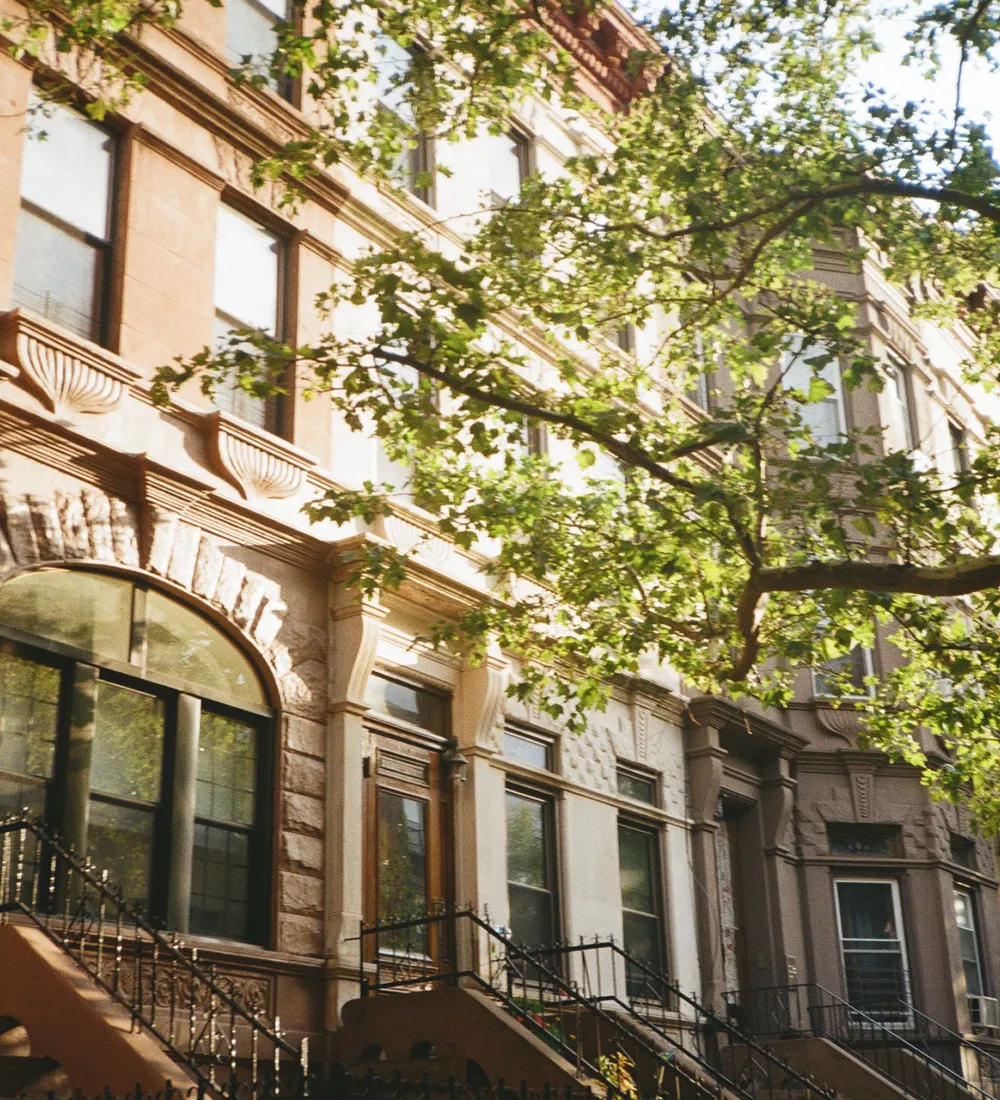
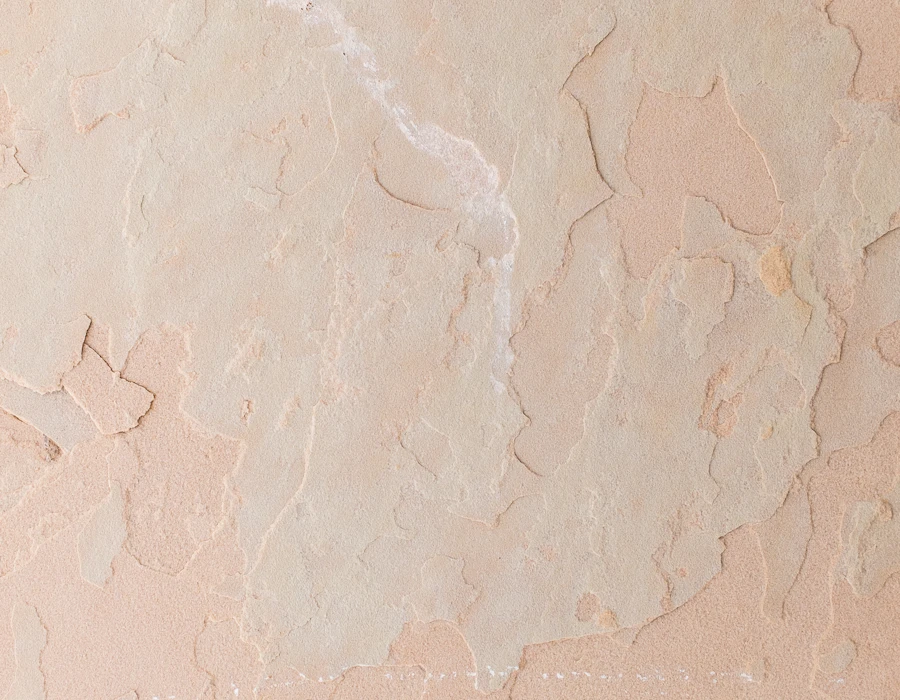
Face bedded brownstone peels in layers along its natural bedding planes.
Parts of a Manhattan Brownstone We Repair
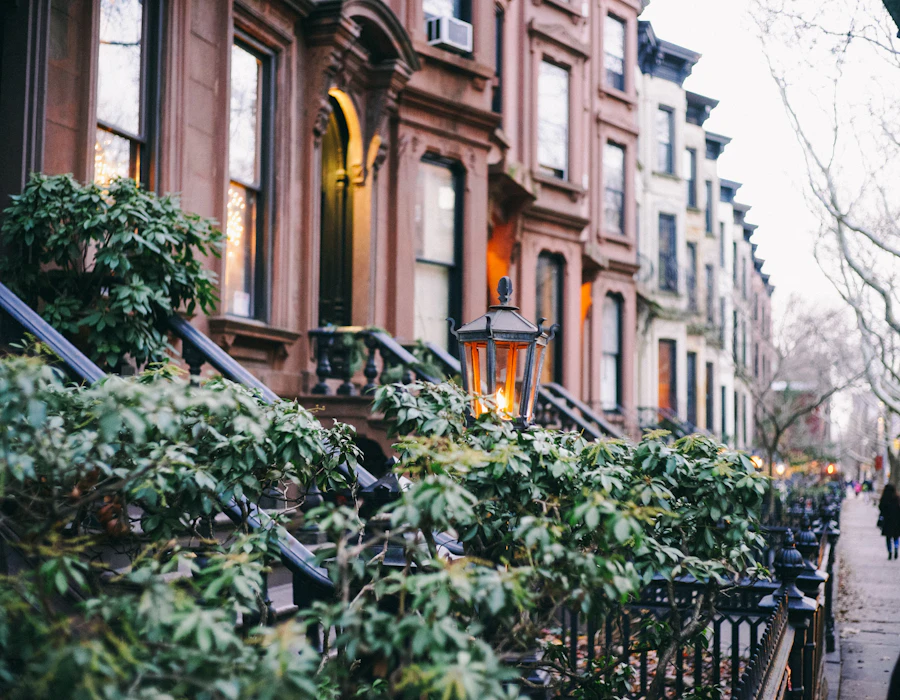
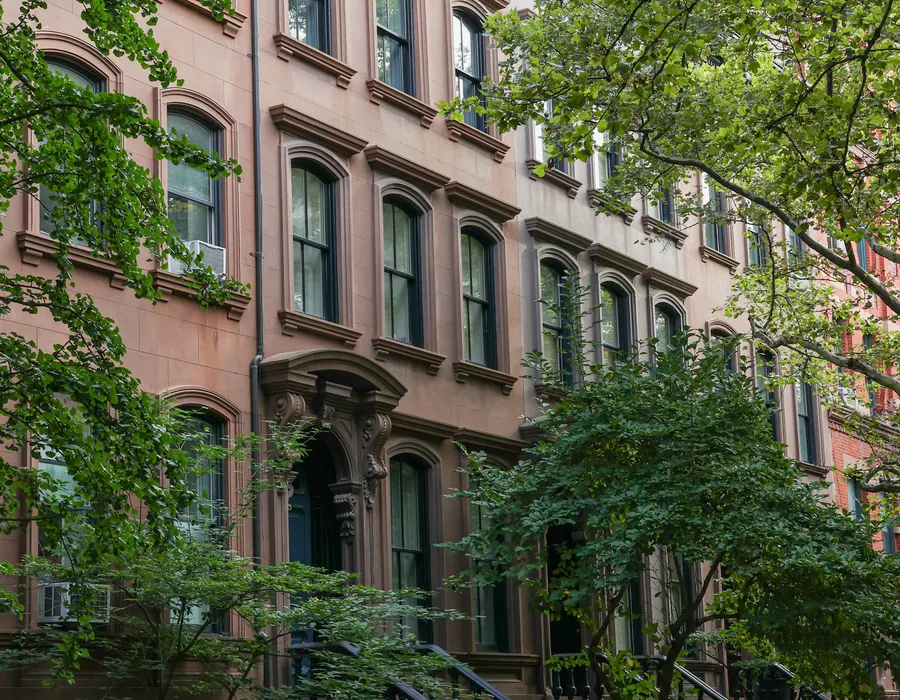
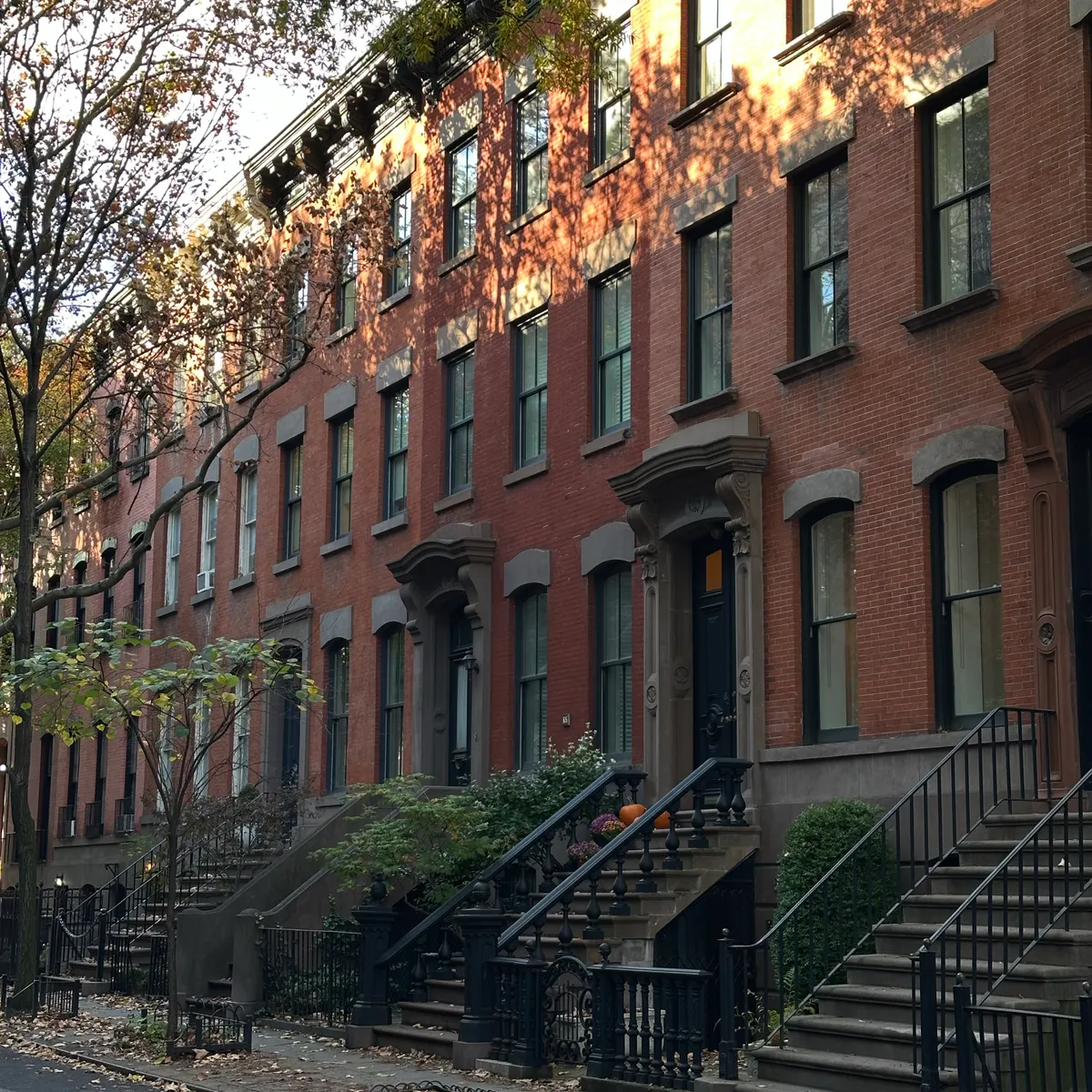
Every part of a brownstone front wears in its own way and needs its own kind of brownstone repair. The numbers on the photo match the list.
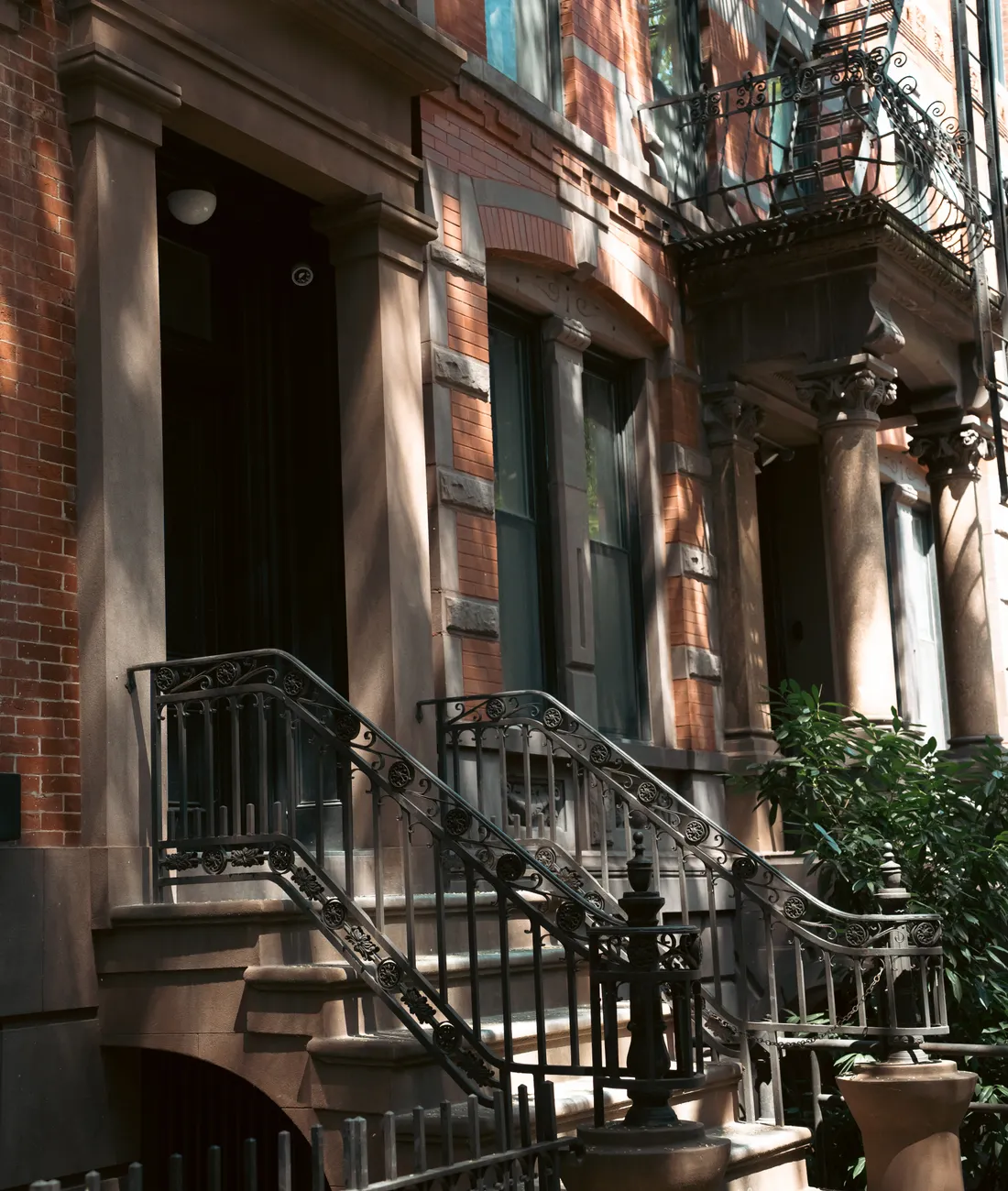
- Window Hoods and Lintel CapsCarved stone above windows that collects water on its top edge
- Window SillsSloped stones that shed rain and crack or erode first
- Facade StoneThe flat brownstone face of the building, often the largest repair area
- Belt Courses and MoldingsHorizontal bands and carved trim that lose their profiles
- Door SurroundThe carved frame around the parlor floor entrance
- StoopTreads, risers and cheek walls that take foot traffic and weather
- Areaway and Basement FrontLower walls exposed to splash, salt and snow
Common Brownstone Problems on Manhattan Row Houses
These are the conditions that call for brownstone repair most often on Manhattan fronts and stoops.
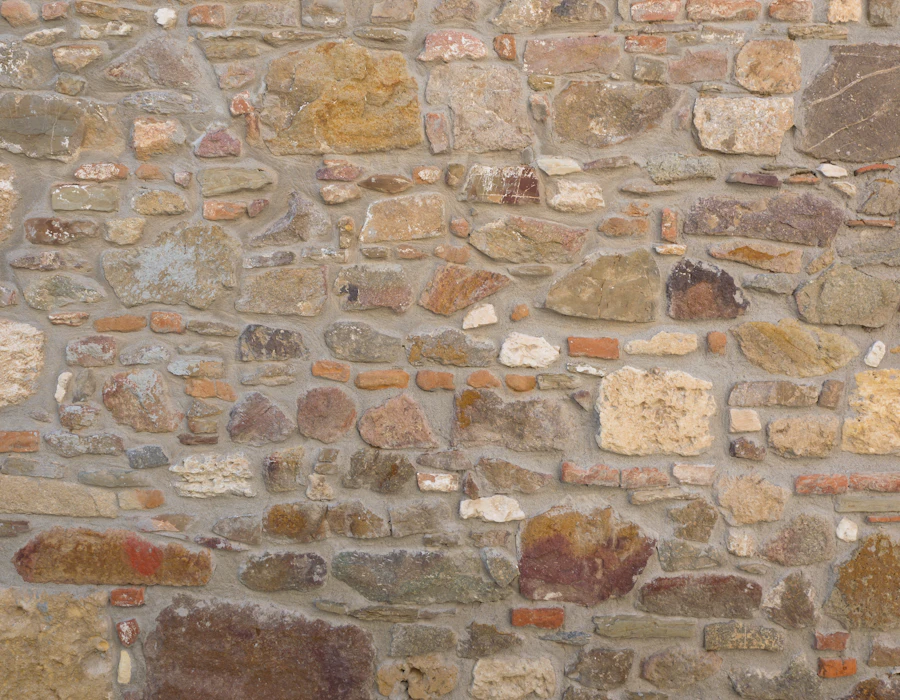
Delamination and Peeling
The stone face separates in sheets along its layers and falls away.
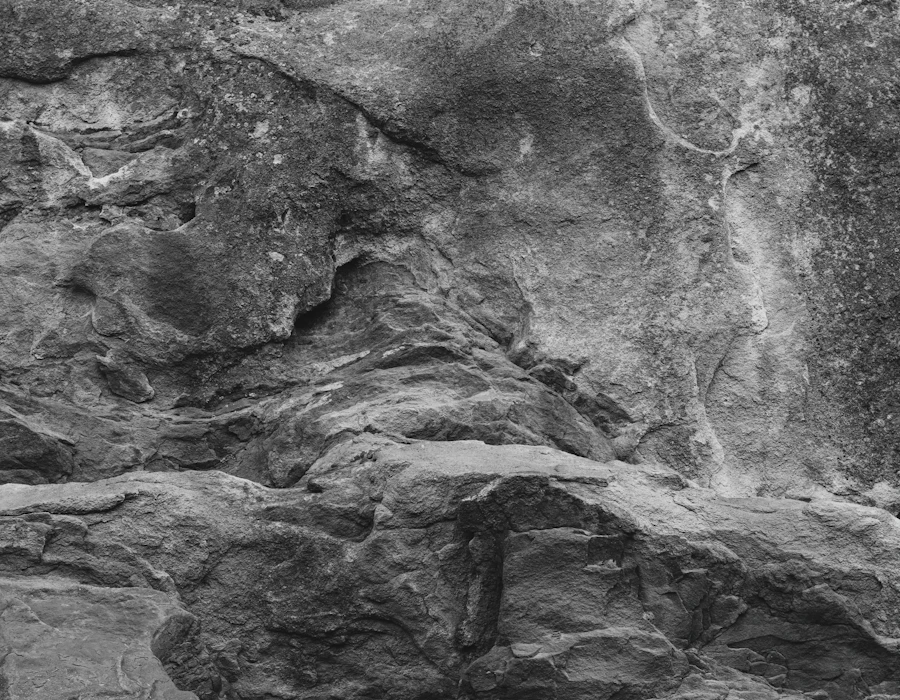
Crumbling Edges and Lost Carving
Corners, hoods and moldings round off until their detail is gone.
Failed Old Patches
Gray cement or the wrong color patching cracks, pops off and stands out on the front.
Cracked Sills and Steps
Water and freeze and thaw split the stones that shed the most rain.
Water Damage at the Stoop
Treads and cheek walls break down where water sits and railings are anchored.
Brownstone Repair Methods for Manhattan Townhouses
The right method depends on how deep the damage goes and how much of the front is affected. Most brownstone work in New York is done by patching, with the other methods saved for bigger losses. Limestone, granite and terra cotta fronts are covered on our stone facade repair Manhattan page.
| Method | What It Involves | Best For |
|---|---|---|
| Composite Patching | Damaged stone is cut back to sound material and built up with a patching mortar tinted to match the brownstone | Local spalls, chipped edges and small losses |
| Resurfacing | The whole face of a damaged area is dressed back and covered with a matched brownstone mortar | Fronts with widespread peeling and many old patches |
| Dutchman Repair | A deteriorated section is cut out and replaced with a fitted piece of new or salvaged stone | Deep losses where a thick patch would fail |
| Profile Recreation | Lost moldings, hoods and carved edges are rebuilt with templates and patching mortar | Window hoods, belt courses and door surrounds |
| Joint Repointing | Mortar joints between brownstone blocks are cut out and refilled with a soft, matched mortar | Open joints between stones on the facade and stoop |
How Our Brownstone Patching and Repair Is Done
Our brownstone repair in Manhattan follows five stages, each checked before the next, so the patch bonds, holds and blends in.
Sound and Map the Brownstone
Every stone is tapped and checked by hand, and loose or hollow areas are marked before any work starts.
Cut Back to Sound Stone
Loose layers and failed patches are removed, and the edges are cut so the new patch locks in.
Install Anchors Where Needed
Deeper patches get stainless steel pins or wire so the patch is held mechanically, not just by bond.
Build Up the Brownstone Patch in Layers
Patching mortar tinted to dried samples of your stone is applied in layers to the original line of the face.
Tool, Texture and Cure the Patch
The final layer is shaped to the original profile and finished to match the surface texture, then kept damp while it cures.
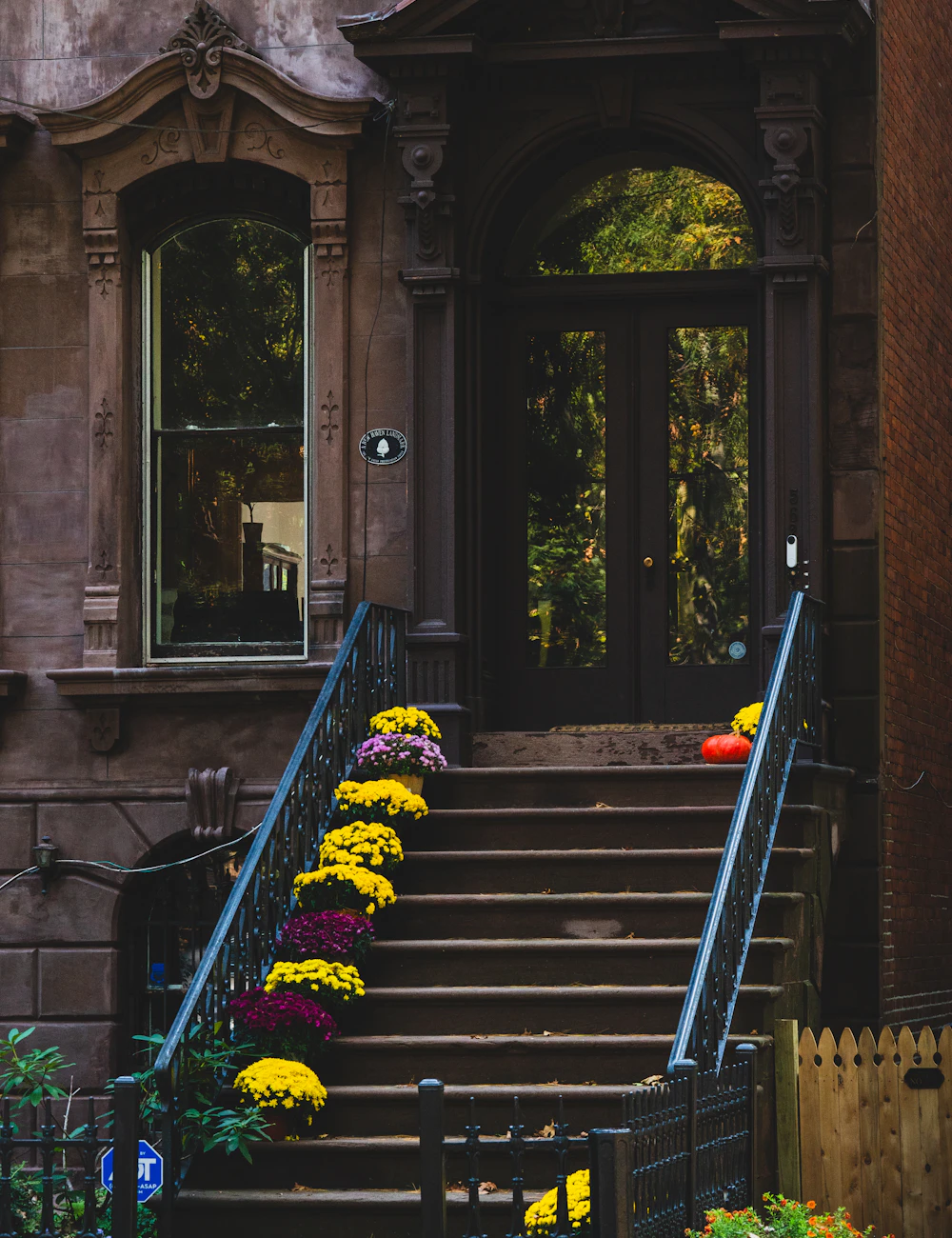
Brownstone Stoop Repair in Manhattan
The stoop takes more punishment than any other part of a brownstone. Feet wear down the treads, water sits on the steps and freezes, and rusting railing posts crack the stone around them. We repair treads, risers, cheek walls and newels, reset loose stones and rebuild worn nosings so the stoop is safe to use and looks like it belongs to the house.
- Patching and rebuilding worn treads and nosings
- Repairing cracked cheek walls and newels
- Resetting railing posts so they stop cracking the stone
- Repointing open joints between stoop stones
Brownstone Repair Across Manhattan Neighborhoods
Manhattan’s brownstone rows are concentrated in a few parts of the island, and we know their buildings well.
- Upper West Side
- Harlem
- Hamilton Heights
- Mount Morris Park
- Upper East Side
- Chelsea
- Greenwich Village
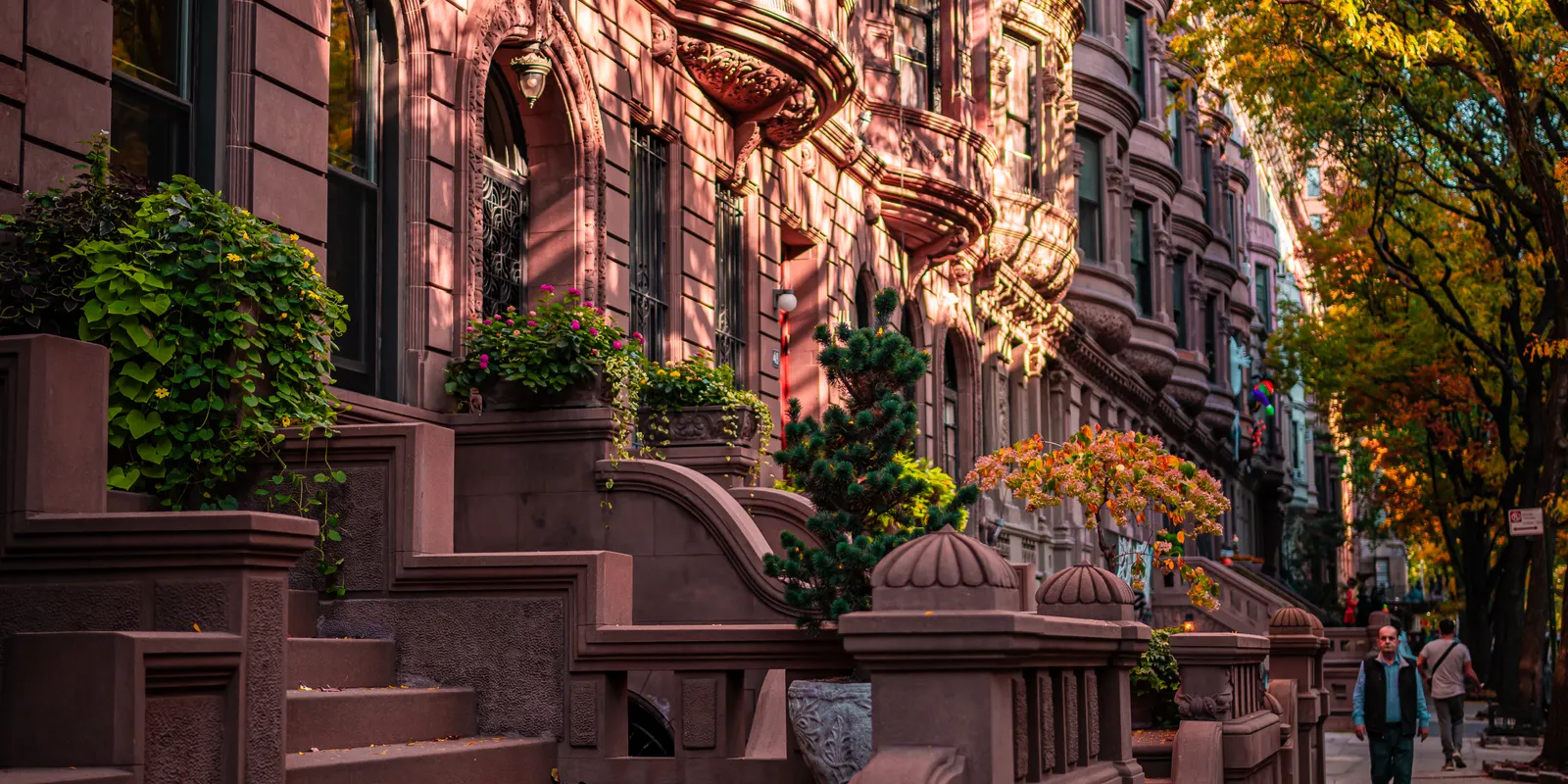
Brownstone Repair on Manhattan Landmark Buildings
Many Manhattan brownstones sit in historic districts. Patching, resurfacing and stoop work on these buildings need a permit from the Landmarks Preservation Commission, which usually asks for sample patches of the brownstone mortar before work begins. We prepare those samples on your building so the color and texture are approved before the full front is done.
Can brownstone be repaired instead of replaced?
In most cases, yes. Patching and resurfacing save the original stone and cost far less than new stone, which is hard to source today. Replacement is kept for pieces too far gone to hold a repair.
How long does a brownstone patch last?
A well made patch, cut back to sound stone, anchored where needed and matched in strength, can last for many years. Patches fail early when they are too hard, too thick or laid over loose stone.
Can old gray cement patches be removed?
Yes. Hard gray patches often trap water and pull away from the stone. We cut them out and replace them with a softer patching mortar tinted to the brownstone.
Can you match the color of my brownstone?
Yes. We mix patching mortar from samples of your stone and test it on the wall, letting each sample dry fully before choosing, because brownstone mortar changes color as it cures.
Do you repair brownstone stoops?
Yes. We repair treads, risers, cheek walls and newels, rebuild worn nosings and reset loose stones and railing posts.
Does brownstone resurfacing need Landmarks approval?
It does if the house is a designated landmark or in a historic district. We prepare the sample patches the Landmarks Preservation Commission asks for so the permit can be issued.
Book Brownstone Repair in Manhattan
Send us photos of your brownstone front or stoop, or call to book a visit. We will check the stone by hand and give you a clear plan for patching, resurfacing or stoop repair.
Related Masonry Services in Manhattan
Brick Restoration Manhattan
Cleaning and paint removal for the brick walls beside your brownstone.
Lintel Replacement Manhattan
Replacing rusted steel that cracks stone and brick above openings.
Chimney Repair Manhattan
Rebuilding and pointing the chimneys on top of row houses.